• Human Rights
    • What are Human Rights?
    • Civil and Political Rights in Sindh
      • Freedom of Expression, Opinion, and Belief
      • Right to Life
      • Access to Justice
      • Right to Privacy
      • Right to Political Participation
      • Right to a Nationality
      • Freedom from Torture and Cruel, Inhuman, or Degrading Treatment
      • Right to Equality and Non-Discrimination
      • Other Civil and Political Rights
    • Economic, Social and Cultural Rights in Sindh
      • Right to Work
      • Right to Education
      • Right to Health & Healthy Environment
      • Right to Housing
      • Right to Food & Water
      • Right to Social Security
      • Right to Culture
      • Right to Information
      • Other Economic, Social and Cultural Rights
    • Rights of Vulnerable Populations in Sindh
      • Rights of Women
      • Rights of Children
      • Rights of Minorities
      • Rights of Labour
      • Rights of Persons with Special Abilities
      • Rights of Refugees and Migrants
      • Rights of Older Persons 
      • Rights of Transgender Persons
      • Rights of Other Vulnerable Populations
  • Policies & Laws
    • Constitution of Pakistan 1973
    • Sindh Laws
    • National Laws
    • Sindh Policies
    • National Policies
    • International HR Regimes
      • International HR Law
      • UN Core Treaties
      • Status of Treaty Ratifications by Pakistan
      • UN Treaties Compliance by Pakistan
      • International Labour Standards
      • Status of ILO Conventions Ratifications
      • Compliance of ILO Conventions by Pakistan
  • Institutions
    • Government Institutions Sindh
    • UN Agencies
    • CSOs
      • Submit Feedback
    • Helplines
  • Knowledge Base
    • Sindh Profile
    • Developments
    • Perspective
    • Research/Publications
      • All Publications
      • SHRC Publications
      • Business and HR Publications
    • Human Rights Violation Cases
    • Videos
    • International Days
  • About
    • Purpose of the Portal
    • Introduction to SHRC
    • Submit Feedback
    • Contact US

Suggestions

SOHRIS

Human Rights in Sindh

SOHRIS

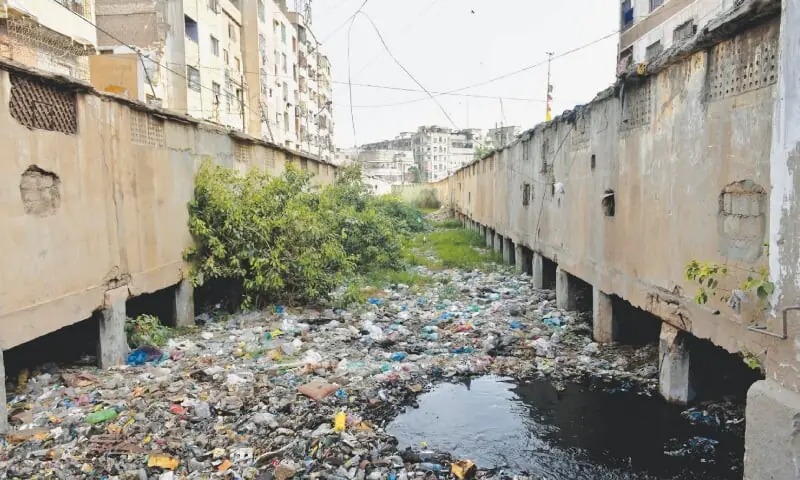
‘Karachi Generates more Waste than Mumbai, Delhi and Dhaka Everyday’

December 7, 2025

• SSWMB chief says city produces 14,800 tonnes of garbage daily
• Provincial capital accounts for 25pc of country’s total recyclable plastic waste, seminar told
• Operation of first biogas plant in Clifton to begin from 15th

KARACHI: Highlighting the gravity of the city’s garbage crisis, a senior official of the Sindh Solid Waste Management Board (SSWMB) has said Karachi generates more than 14,800 tonnes of solid and municipal waste daily which exceeds the refuse generation levels of Mumbai, Delhi and Dhaka.

“District Central alone produces over 3,000 tonnes per day, the highest among the city’s seven districts,” SSWMB Managing Director Tariq Ali Nizamani told a seminar on modern, sustainable urban waste management solutions aligned with the Sustainable Development Goals (SDGs).

“Around 42 percent of Karachi’s waste consisted of organic material that could be converted into biogas or compost through proper segregation and processing,” he said, adding that Karachi also accounts for 25pc of Pakistan’s total recyclable plastic waste.

The event was jointly organised by the Central Standing Committee of the Federation of Pakistan Chambers of Commerce & Industry (FPCCI) on SDGs and the National Forum for Environment & Health at the Federation House.

Biogas plant at Bagh Ibne Qasim

Mr Nizamani informed the audience that the SSWMB’s first biogas plant will commence operations from December 15, supplying low-cost cooking fuel to around 70-80 gas-deprived households in Clifton.

He said the biogas plant at Bagh Ibne Qasim would process up to seven tonnes of livestock waste daily to supply fuel to the nearby households at a subsidised rate of Rs2,000 per month.

“In its next phase, the facility will also generate electricity to help resolve longstanding power outages at the iconic park,” he said, adding that another biogas plant would soon be set up at Cattle Colony that would help address the problem of marine pollution being caused by untreated cattle waste’s continued discharge into the sea. He said that heavy vehicles transporting waste recklessly — often scattering rubbish on the roads — would be fined up to Rs20,000 as soon as the board was authorised by the provincial government to penalise such violations.

Talking about SSWMB’s operations, Mr Nizamani said over 13,000 workers and 2,305 vehicles were deployed across Karachi for waste collection and disposal.

“We are using cutting-edge technology for real-time monitoring of the entire waste management chain — from household collection to landfill sites. A helpline, call centre and mobile application are also fully operational to receive round-the-clock complaints on unattended waste,” he said.

A World Bank-funded solid waste project, he pointed out, was underway to modernise the city’s waste infrastructure, including new garbage transfer stations and a fully engineered sanitary landfill.

Earlier, FPCCI Vice President Aman Paracha emphasised the urgent need to roll out modern waste disposal systems, noting that unattended heaps of rubbish remained a major civic concern for residents.

Senior environmentalist Saqib Ejaz Hussain urged the Sindh government to ensure safe disposal of the city’s medical waste, warning that its illegal burning at night significantly worsens air pollution.

Speaking on behalf of the Dawoodi Bohra community, Ali Asghar Quettawala called for a one-window operation in the city to handle all categories of waste, including municipal, construction and sewage waste.

Naeem Qureshi representing the FPCCI Standing Committee appealed to the government to allocate greater financial and logistical support to civic agencies to strengthen the waste management system.

Climate activist Ahmed Shabbar called for launching an awareness drive to ensure that citizens take part in the campaign to make Karachi clean and green.

NFEH Secretary General Ruqiya Naeem and Vice President Engineer Nadeem Ashraf also spoke.

Published in Dawn, December 6th, 2025.

Share this
  • Facebook
  • Twitter
  • Pinterest
  • Linkedin
  • Whatsapp
  • Reddit
  • Email

Leave a Reply Cancel reply

You must be logged in to post a comment.

You might be interested in

court

Man Sentenced to Life Imprisonment in Rape case

Seven-year-old Girl Dies of Dengue

About SOHRIS

A dedicated platform to providing comprehensive information on human rights in Sindh.

Brought to you by Sindh Human Rights Commission and Obun2

  • Terms & Conditions
  • Copyright Infringement
  • Disclaimer
  • Contact
https://www.youtube.com/watch?v=Fm4HJwp3Ws0
  • Human Rights
    • What are Human Rights?
    • Civil and Political Rights in Sindh
      • Freedom of Expression, Opinion, and Belief
      • Right to Life
      • Access to Justice
      • Right to Privacy
      • Right to Political Participation
      • Right to a Nationality
      • Freedom from Torture and Cruel, Inhuman, or Degrading Treatment
      • Right to Equality and Non-Discrimination
      • Other Civil and Political Rights
    • Economic, Social and Cultural Rights in Sindh
      • Right to Work
      • Right to Education
      • Right to Health & Healthy Environment
      • Right to Housing
      • Right to Food & Water
      • Right to Social Security
      • Right to Culture
      • Right to Information
      • Other Economic, Social and Cultural Rights
    • Rights of Vulnerable Populations in Sindh
      • Rights of Women
      • Rights of Children
      • Rights of Minorities
      • Rights of Labour
      • Rights of Persons with Special Abilities
      • Rights of Refugees and Migrants
      • Rights of Older Persons 
      • Rights of Transgender Persons
      • Rights of Other Vulnerable Populations
  • Policies & Laws
    • Constitution of Pakistan 1973
    • Sindh Laws
    • National Laws
    • Sindh Policies
    • National Policies
    • International HR Regimes
      • International HR Law
      • UN Core Treaties
      • Status of Treaty Ratifications by Pakistan
      • UN Treaties Compliance by Pakistan
      • International Labour Standards
      • Status of ILO Conventions Ratifications
      • Compliance of ILO Conventions by Pakistan
  • Institutions
    • Government Institutions Sindh
    • UN Agencies
    • CSOs
      • Submit Feedback
    • Helplines
  • Knowledge Base
    • Sindh Profile
    • Developments
    • Perspective
    • Research/Publications
      • All Publications
      • SHRC Publications
      • Business and HR Publications
    • Human Rights Violation Cases
    • Videos
    • International Days
  • About
    • Purpose of the Portal
    • Introduction to SHRC
    • Submit Feedback
    • Contact US